
One-on-one mentorship · for service and aftersales managers at farm equipment dealerships
Take the strategic seat that service leadership deserves.
Six months, on the crop calendar, with support while you apply the work in your own operation.
You run the service department as a business, stop being the bottleneck, and show your director, in money, what your team delivers.
30 to 45 minutes, Monday to Thursday, held in Portuguese. If it is not a fit, I will tell you.
- 16 one-on-one sessions of 75 minutes
- about 6 months
- 3 founding seats, the most I can follow closely
From the work order to the bottom line.
You already know what to do. What is missing is time, and someone beside you.
Today the customer wants the machine back for harvest, and the team waits for your answer.
The manufacturer asks for KPIs, and the board asks why margin dropped.
Management gets pushed to after seven at night, when it happens at all.
This is not a lack of effort or skill.
The pressure pulls you into firefighting, and what you learned in courses stays in theory.
Until your numbers connect to what the board measures, your request for a technician will be turned down.
And the department's potential will stay on the table.
It is for you if
- you are a service or aftersales manager at a farm equipment dealership, any brand, with a team and KPIs under your responsibility;
- you reached the role through technical skill or from another area, and want to apply what you learn in your own operation, not take one more course;
- you want to become an aftersales director or a regional manager. You do not need access to the income statement.
It is not for you if
- you want a ready-made recipe, a guaranteed promotion or raise, or a mentor who solves things for you;
- you will not commit to applying what we agree between sessions;
- you are not yet in the role, or you represent a manufacturer or a company looking for corporate training: this is one-on-one mentorship, applied to your real operation.
A course gives you theory. Here, someone works with you while you apply it.
There is training for service leaders: manufacturer programs, courses, graduate degrees.
What barely exists is someone beside you when you apply it, in Portuguese, on the crop calendar and on your operation's numbers.
How each session works
- 01
Case of the Week
You bring a real problem and work through it with eight questions. The mentor does not solve it for you.
- 02
Decision tool
Built with your own numbers, never with the dealership's accounting data.
- 03
Application
How it fits into your week, in your shop.
- 04
Written commitment
One action, with a deadline, in your Management Notebook.
Between sessions, you get a Wednesday check-in and a summary within 24 hours.
The Direct Line runs Monday to Thursday, with a reply within 1 business day.
Session 1 ends with a decision for the week.
Seven Ritter Method Decision Tools.
Each answers one question and runs on your own estimates, never on the dealership's accounting data.
- Manager X-RayWhere do I stand as a manager, and what changes first?
- Cost of the Manager's CalendarHow much does it cost for me to be the bottleneck?
- Profitability by CapacityHow much could the team bill, and where are hours lost?
- Team SizingHow many technicians, and when?
- Absorption Factor CalculatorHow much of fixed and operating expenses do parts and service margins cover?
- Value-to-Grower CalculatorHow much is the service worth to the grower?
- Management ScorecardWhat changed, with evidence?
It includes the 7 Decision Tools applied to your numbers.
It also includes rehearsals of the difficult conversation and of the presentation to your director.
The Management Scorecard is done in sessions 1, 8, 13 and 16.
The full list comes with the proposal, after the conversation.
Lead, measure, translate, prove, multiply.
- P1 · Off-season
Lead
Team Sessions 1 to 4 - P2 · Off-season
Measure
Running the department Sessions 5 and 6 - P3 · Off-season
Translate
Business language Sessions 7 and 8 - P4 · Season
Prove
Customer success Sessions 9 to 12 - P5 · Season
Multiply
Continuous transformation Sessions 13 to 16
- P1 · LeadGet out of firefighting and build a team that solves problems without going through you.
- P2 · MeasureProcesses, KPIs and capacity in place, connecting the operation to results.
- P3 · TranslateLink the operation to absorption and results, and present to the board in its own language.
- P4 · ProveNew service offers and success plans for strategic customers, proving value to the grower.
- P5 · MultiplyDocument, develop a successor and make sure progress survives the next staff change.
Five moves in two phases, like the crop year.
“Is my department ready for the season?”
You take the day-to-day off your back, rebuild the fundamentals and develop someone who answers in your place.
Then you link the team's numbers to results and present them to your director.
“How much value did I harvest, and can I multiply it?”
You launch new service offers and prove to the grower what the service is worth.
And you document everything, so it survives the next staff change.
The season is decided in the off-season.
What changes in six months.
| Move | Today, you | By the end, you |
|---|---|---|
| P1 Lead | are the go-to person for everything and leave management for after seven | run the department without being the bottleneck, with the team solving problems without going through you |
| P2 Measure | ask for a technician because “the team is overloaded” | run the operation from your own dashboard, knowing how many technicians you need and where hours turn into money |
| P3 Translate | defend the department with hours, work orders and billing | have presented your director a business view that links service to parts, sales and connected solutions, in their language |
| P4 Prove | serve the strategic customer when the machine breaks down | manage strategic customers with a success plan and prove to the grower what the service is worth |
| P5 Multiply | start from zero every time people change | leave a successor in development and your results documented |
- Session 1ends with a decision for the week.
- Session 8the business view is presented to your director.
- Session 16Transformation Case and final Management Scorecard.
Every move in the method has already been done in the field.
This is the founding group: today the proof is my own case, built as a team with managers, customers and the network.
Your Management Scorecard will be next.
- ~−15% → ~+25%
- service margin in a 17-store territory (MT, RO, AC and MS), 2015 to 2018
- 100%
- fixed-cost absorption by aftersales in the same territory
- 150 → 35K+
- machines on connected services, in two years, in Latin America
- 130+
- certified instructors in 6 dealer training centers
P1 Lead
I watched closely as a manager delegated warranty, technician planning and the work-order standard to the shop foreman.
He went out to sell service packages, and the store became the first in its group to turn a profit on service.
I led a team that grew from 17 to 42 people.
P2 Measure
At the largest store in the territory, revenue hit a record.
What changed was a shop foreman, time tracking and data-driven technician management.
Later, I led the connected services model in Latin America.
That meant 71 connected support centers across 15 countries.
P3 Translate
In the territory turnaround, service margin went from about −15% to about +25%.
Revenue grew about 3.6 times, with 100% fixed-cost absorption.
Parts revenue grew 60% in three years, with 5 more points of margin.
P4 Prove
Customer NPS in the territory went from 56 to 87.
During the introduction of cotton pickers, availability stayed above 90% in the main operations of the main customers.
On a connected farm, second-crop corn yielded 15% more.
P5 Multiply
Training became a service sold to the network, with 6 training centers modernized or opened.
More than 130 instructors were certified, and network certifications went from about 25% to more than 80%.
And leaders who did not want to lead now lead teams and develop successors.
These numbers come from my work, as a team, with managers, customers and the network.
The connected support center figures are those published by the manufacturer.
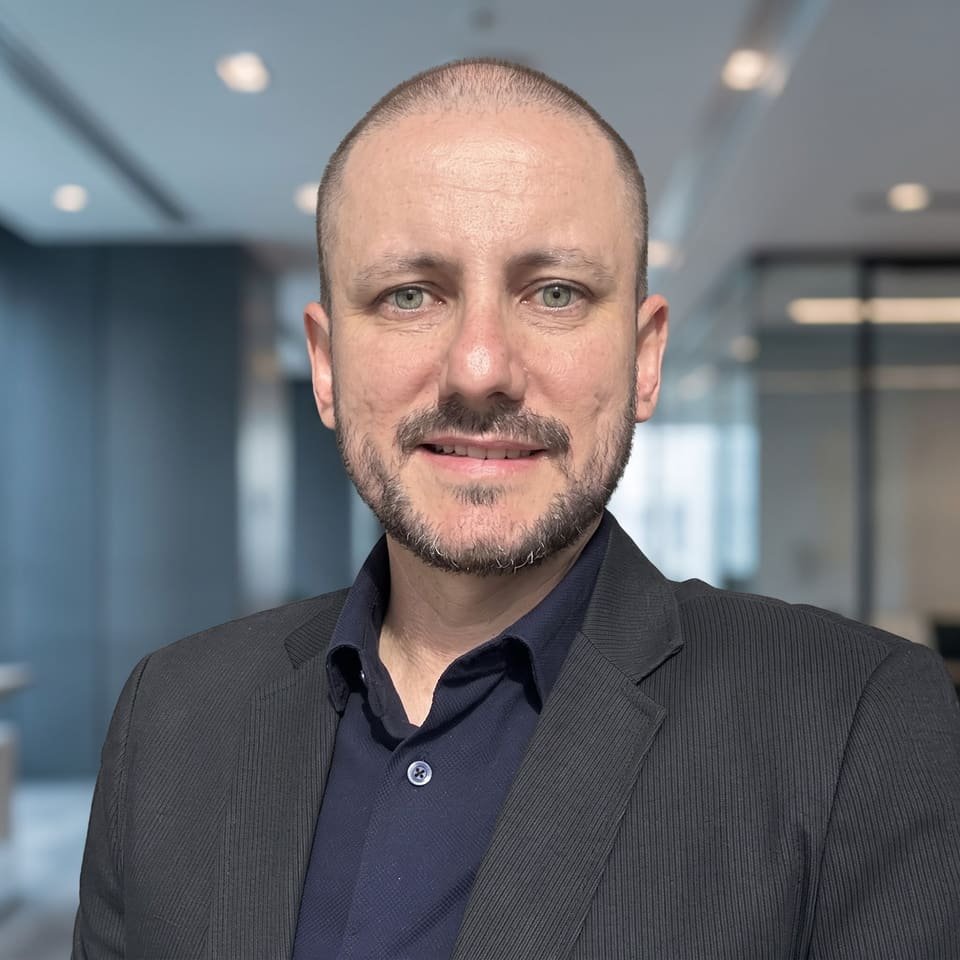
Someone who worked side by side with the managers.
20 years of career · 18 in ag machinery and agribusiness · 15 at John Deere
I was never a shop technician.
I was a product engineer designing sprayers.
Then a service coordination trainee at a dealer, leading technicians.
At John Deere, I was the product support specialist technicians called when they could not fix it in the field.
For the manufacturer, I led the service profitability turnaround of a 17-store dealer network, side by side with the service managers.
It is the same crossing you are starting now: from the specialist who solves the problem to the manager who makes the service business deliver.
You do not carry the risk alone.
- 1
X-Ray guarantee.
If, at the end of the first session, you conclude the mentorship is not right for this moment, I refund 100% of the fee.
- 2
Implementation guarantee.
If you keep every commitment we agree and do not reach session 8 with the business case ready for your director, I continue with you in extra sessions, at no cost, until you get there.
I do not promise margin, because it does not depend on you alone.
The mentorship builds the management capability that makes the result possible.
What people usually ask.
I have no time, especially during the season.
Sessions are one-on-one, 75 minutes, in the evening or from 7 to 9 a.m., Monday to Thursday.
They are weekly at first and every two weeks later, with the calendar adjusted to your region's season.
Nothing is recorded for you to watch later, and the plan for getting through harvest is agreed with you before the peak.
I have done courses, a graduate program and the manufacturer's training. What is the difference?
A course gives you theory.
Here, every session opens with your real case and closes with a written commitment, followed up until the next one.
What changes is application, on your own numbers.
It complements rather than competes.
The mentorship is one-on-one, with no waiting list, and works for any brand.
It brings its own tools for capacity, absorption and value to the grower.
Do I need access to the dealership's income statement?
No.
The tools run on your own estimates and, where something is missing, on a reference case, the Mirror Dealership.
No confidential dealership accounting data is requested or analyzed.
I did not come from the shop. Is this for me?
Yes.
The method is about service management, not technique.
The mentorship covers how to earn the team's trust without pretending to be the best technician in the house.
I am not in the role yet. Can I join?
One-on-one mentorship requires being in the role.
If you work in parts, sales or administration and want to lead service, write through the form.
An entry path is in preparation.
Does the mentorship promise a promotion, a raise or margin?
No.
It builds the management capability that makes the result possible.
Department margin does not depend on you alone, so it is not promised.
How much does it cost? Can my director sponsor it?
The investment is presented after the discovery conversation, according to where you are.
You can pay in installments over the six months.
The invoice can be in your name or the dealership's.
You also receive a version of the proposal for your director to sponsor.
Who offers the mentorship?
Ritter Partners.
It is one-on-one mentorship for individuals, led personally by Emanuel Ritter.
It is not offered by any other company or institution.
Sessions are held in Portuguese.
Book a discovery conversation.
It is not a free class or a consulting session: together we see whether your moment calls for this mentorship, in Portuguese.
If it does not, I will tell you.
- 01You describe where you are. Role, team and the problem that weighs most on your routine.
- 02I give you a reading. Which of the four fronts your operation would gain most from right now: team, running the department, business language or customer.
- 03We decide whether it fits. If it does, the offer is presented right there, after the conversation.